

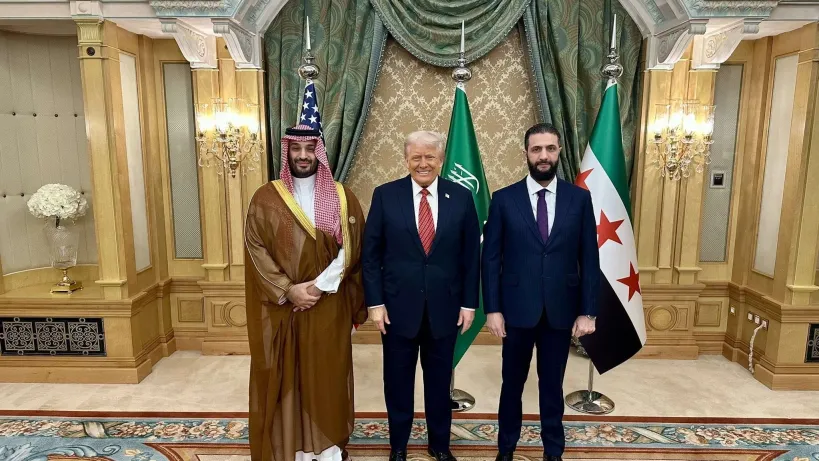
The room was tense, yet hopeful, as Saudi Arabia's top brass sat in Riyadh to discuss a move that could reshape regional dynamics. The United States had decided to lift sanctions on Syria, a decision that sent ripples through the corridors of power in the Middle East. This wasn't just any meeting of the Saudi Council of Ministers; it was a session where the Custodian of the Two Holy Mosques, King Salman, himself took the helm, ready to address the unfolding geopolitical shift.
It was a big deal. The Cabinet, in a rare public commendation, praised U.S. President Donald Trump for his role in this diplomatic pivot. His announcement, made during a visit to Saudi Arabia, led to the repeal of the Caesar Act, a move seen as a friendly gesture towards Damascus. This shift wasn't just about words; it was about realigning alliances and advancing shared interests.
But the Cabinet didn't stop there. They lauded the ambitious high-speed electric train project linking Saudi Arabia and Qatar. This isn't just a train; it's a catalyst for economic activity, tourism, and Gulf integration. The project is seen as a beacon of modernity in a region often divided by politics.
Behind closed doors, discussions were intense. The Crown Prince and Prime Minister Mohammed bin Salman had been busy, talking with leaders from friendly nations. The goal? Expand cooperation, tackle global challenges, and ensure everyone's on the same page.
The Saudi-Bahraini and Saudi-Qatari Coordination Council meetings were also on the agenda. These gatherings, which resulted in new agreements and memoranda, are about more than just paperwork. They're a testament to Saudi Arabia's commitment to strengthening ties with its neighbors.
Regionally and globally, Saudi Arabia is playing a crucial role. At the 46th session of the Gulf Cooperation Council, the Kingdom's vision for joint Gulf action was clear. King Salman's blueprint for cooperation was emphasized, highlighting the need for unity in an ever-volatile world.
Domestically, the Cabinet is pushing hard for progress. They're not just talking about development; they're making it happen. The commitment to enhancing citizens' capabilities and achieving national goals is unwavering. Initiatives are being accelerated, and the pace of change is palpable.
Riyadh, AlUla, and Riyadh Al-Khabra being included in UNESCO's Global Network of Learning Cities isn't just an accolade. It's a signal of Saudi Arabia's commitment to education and sustainable growth. And when it comes to technology, the Kingdom is no slouch. Ranking second globally in Digital Government and leading the Arab world in AI growth showcases its tech prowess.
Events like the Made in Saudi Expo 2025, with Syria as the guest of honor, are pivotal moments. They forge partnerships and enhance the competitiveness of national products, opening doors to regional and global markets.
On the governance front, the Cabinet is proactive. From approving rules for naming public facilities to empowering persons with disabilities in the GCC, they're ensuring policies are modern and inclusive.
Internationally, Saudi Arabia is making waves. From drafting extradition agreements with Uzbekistan to establishing a Saudi-Spanish Strategic Partnership Council, the Kingdom's diplomatic reach is expanding. Collaborations with Japan, Hong Kong, Singapore, and the FAO highlight a strategic global outlook.
In accounting and auditing, partnerships with North Macedonia and Belarus are being forged. The Kingdom is leaving no stone unturned, ensuring that it's not just part of the conversation but leading it.
Comments
Log in to write a comment