

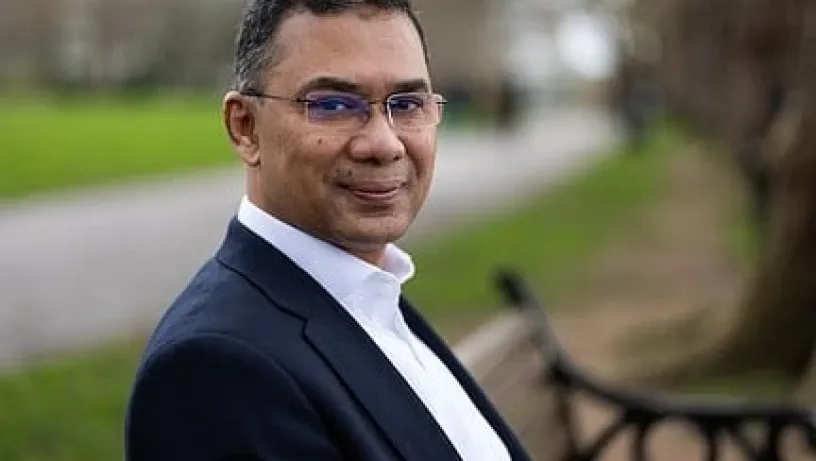
Picture this: a leader stepping back onto his homeland's soil after nearly two decades, his journey met with both hope and controversy. Tarique Rahman, the acting chairman of the Bangladesh Nationalist Party (BNP), made a grand return to Bangladesh after 17 years in exile. And he's not just back for a reunion; he's eyeing the prime minister's seat as the country gears up for what promises to be a hotly contested election next February.
The Return of a Political Heir
Rahman, son of former prime minister Khaleda Zia, is stepping into the political spotlight with a mix of urgency and ambition. His mother, a towering figure in Bangladeshi politics, has been seriously ill for months, adding a personal layer to his homecoming. But it's not just family matters drawing him back. The BNP is setting its sights on reclaiming power, and Rahman is their man.
The scene at Dhaka’s airport was nothing short of a political spectacle. Hundreds of thousands lined the route to greet Rahman, brandishing party flags, placards, and flowers. The air was thick with chants and slogans, a testament to the fervor and anticipation surrounding his return. Under tight security, senior BNP leaders were there to welcome him back to the fold.
A Symbolic Gesture
Rahman, dressed sharply in a light grey blazer over a crisp white shirt, made a point of stepping barefoot onto Bangladeshi soil. He even picked up a handful of earth, a symbolic gesture marking his return to the South Asian nation. It was a moment heavy with significance, both personal and political.
Standing beside the driver’s seat of a bus headed for the reception venue, Rahman waved and smiled at the throngs of supporters eager to catch a glimpse of their returning leader. The atmosphere was electric, charged with both nostalgia and the promise of change.
Clearing the Path
Rahman's return wasn't just a matter of booking a flight home. Convicted in absentia on charges including money laundering and an alleged plot to assassinate former Prime Minister Sheikh Hasina, Rahman's legal troubles were a significant hurdle. But fate, it seems, had other plans. When Hasina was ousted last year in a dramatic student-led uprising, the rulings against Rahman were overturned, clearing his path back to Bangladesh.
Hasina herself is now living in exile in India, her political fortunes having taken a steep downturn. Last month, she was sentenced to death for her part in quelling anti-government protests, a charge she has vehemently denied. The political landscape of Bangladesh is nothing if not tumultuous, and Rahman's return is sure to stir the pot even further.
A Nation on the Brink
With the general elections looming, the stakes are high for Bangladesh. The student-led revolt that saw Hasina ousted took a devastating toll, with UN investigators estimating up to 1,400 deaths. Now, as Rahman takes his place in the political arena, the nation waits to see what his return will bring.
Will he lead the BNP back to power, navigating the complex web of alliances and rivalries that define Bangladeshi politics? Or will his past controversies come back to haunt him? As Bangladesh stands on the cusp of potential change, all eyes are on Rahman and the unfolding drama in Dhaka.






Comments
Log in to write a comment